There is a straightforward answer as to why your morning routine is wanting without SPF: forgo daily sun protection and you are leaving your skin open to damage of the kind that accumulates unobtrusively. You do not have to be out in the elements for UV exposure to register; it happens on overcast days, in a brief commute or by the window. Which is what turns an SPF regimen from some beauty afterthought into a fundamental habit.
I am Clara Winslet and I would put it to you that sunscreen is the one part of skincare more should approach with the same regularity as brushing their teeth. From my vantage point in the treatment room I see it time and again: an individual will put money into facials, serums and make up but then overlook the very thing that safeguards all that. That is the essence of spf why your morning routine is so important.
A Quick Takeaway

Should you take nothing else away from this piece, make it this: apply a broad spectrum SPF to your face and neck and any other exposed skin each morning, and in sufficient quantity. It is the sensible way to conclude your morning with sunscreen no matter if your day is spent at an office desk, outdoors or in front of a bright window.
Then there is consistency, which is where you will find the real advantage. Make a decent effort most days and you will be better off than with the sporadic heroics one puts in when a beach day has been too much.
What SPF Does for Your Skin
“Sun protection factor” conjures up images of burning for most. Yet sunscreen is as much about putting off the inevitable as it is about immediate relief: uneven tone, photoaging, pigment changes and the like. A quality broad spectrum product will give you UVA and UVB cover. The latter is what causes a burn, but UVA is the one to watch. It is deceptively steady in its work towards premature ageing and gets underestimated.
UVA And UVB 101
UVB is the troublemaker, the one that makes skin hot and red and irritable. UVA is of a quieter disposition but does plenty of harm to collagen and leads to fine lines and pigmentation. Hence the relevance of spf why your morning routine matters even if you have no intention of being outside.
It is here that “photoaging” is a useful term and not mere jargon. It refers to the creasing, roughness and loss of firmness that comes from UV exposure and shows itself sooner than it might.
More Than a Cosmetic
Prevention of skin cancer is another matter entirely. Australia’s figures for skin cancer are among the highest on the planet, says the Department of Health and Aged Care in its official information from the Australian Government. That in itself is reason enough to consider spf why your morning routine is not a vanity exercise.
In the clinic I have had clients tell me they only use sunscreen for the beach. But the skin does not distinguish between “serious sun” and running an errand. The UV you pick up in the course of a day is still there.
Everyday Exposure
“I am in for the most part so I don’t need it,” is the line I hear a lot. It has a ring of sense to it but is seldom the case. The reality of spf why your morning routine is that you get your fill in small ways: the school run, a coffee, the walk to the car, or a cycle to work in Fremantle where optimism outstrips the shade. A weekday is ample justification.
Driving and Windows
People do not appreciate how UVA can go through glass where UVB cannot, tying indoor exposure to the need for SPF. If you are in the car or working in natural light, it is worth doing. It is one of those things that seems of little consequence until some years have gone by. Ask some of my clients why one side of the face is a touch more weathered and driving will feature in the reply. Not invariably but frequently enough for me to be making the spf why your morning routine speech like an old favourite.
As for blue light and screens, that is something that generates more marketing copy than hard facts. One could not say the evidence is as unequivocal with regard to your everyday device exposure as it is for UV radiation, so I see no point in making too much of it. You would be better to focus on sunlight and visible light, assuming you are inclined to pigmentation.
Then there is the blue-light hysteria which should not get in the way of what is plain to see. To put it bluntly, forgoing sunscreen while you put every anti-ageing serum in the shop in your basket is rather like putting a patch on the dunny door when there is no roof. A sensible finish to your morning routine is spf why that is.
The Right Formula
Forget the fancy stuff. The sunscreen you want is the one you can put on in the right quantity day in day out without cursing the texture come Tuesday. Be practical about spf why your morning routine is what it is: go for something you will wear, not some aspirational product.
Lifestyle, sensitivity, skin type and the like all have a bearing. There is little point if your makeup has to be packed in like sardines over top or the sunscreen stings; you will not use it.
SPF 30 or 50?
In Australia where the UV can be strong, SPF 50 (or 50+) is the sensible default for most. Properly applied, an SPF 30 is good enough, but life is not always so neat and people tend to under-apply. The higher number is useful insurance. That is the kind of margin for error and consistency spf why your morning routine should have.
| Option | In practice | Best suited to |
| SPF 30 | Generous application and reapplication gives good protection | One who puts on enough and tops up |
| SPF 50 or 50+ | More of a buffer if you do not put on as much as you should | For the Australian outdoors or pigment-prone skin |
| Physical Sunscreen | Mineral filters, good for sensitive skin | Reactive or post-treatment |
| Chemical Sunscreen | Lighter, more invisible under makeup | As you would expect |
Do not read too much into whether it is a physical or chemical sunscreen as long as it is broad spectrum and you have no trouble with it. What wins in the end is comfort and that you actually use it.
Tailoring It
Oily skin calls for a gel or fluid, dry skin a cream. If you are sensitive, take the time for a patch test and a less complicated formula. Have been to the practitioner for some cosmetic work? Take his or her advice. This is where spf why your morning routine is a personal matter.
I am not sure what the point is in going down the rabbit hole of Reddit, YouTube, Lifehacker or Priceline shelves as some of my clients do and come away at a loss. Balance App, Facebook, reviews, they are fine, but your skin will tell you more than any online raving.
Proper Application
Most make their mistake here, not with the brand or the ingredients, but the amount. Put on too little and the protection on the label is meaningless. So for the real-world value of spf why your morning routine, how you apply it is as important as the bottle you pick.
In the treatment room I can put you right: you either use sunscreen or you use the concept of sunscreen. They are not one and the same.
A quick rule of thumb
A quick rule of thumb for the face is to run a line of it along two fingers, and perhaps a little more for the neck depending on the size of your hand and how the product goes on. Do not neglect the ears, hairline or eyelids (if you can stand it) and the side of the neck. Common errors with SPF.
Let it be the last thing in your skincare before you put on your makeup, and let it settle for a minute or two. Otherwise you will be sliding around by mid-morning and spf why your morning routine is supposed to work will be for naught.
Routine
Cleanse, put on your moisturiser or hydrating products and then your sunscreen. It is the top coat. Do not try to hide it under heavy creams. And if your moisturiser has an SPF in it, question whether you are using enough of it to warrant the claim. Chances are you are not. A separate step is more dependable and yet another reason spf why your morning routine is not optional.
Cosmetic frustration

Cosmetic frustration is the principal impediment to putting on sunscreen every day. There are those who fear their foundation will split or put on a shine, not to mention pilling and flashback before 9:15 am. You can see why. Yet with SPF under your makeup there is no problem, provided you have the sense not to demand of a single product what five would do. In that lies the practicality of spf in your morning routine.
There is little call for an extra primer when the sunscreen sits right; a less complicated routine has its merits.
Layering Without The Fuss
Put on your foundation after the sunscreen has had time to settle and keep the layers light. Do not go at it with a brush or sponge in any aggressive manner. A tinted sunscreen has its uses but should not be taken as a substitute for a full application unless one is being generous with it, which is not the case for most. I make it a point to tell my clients that the onus is on the makeup to work with the sunscreen. To give up UV protection in the name of flawless coverage is a bad exchange. Another way of looking at spf why your morning routine is in everyday life.
Common Mistakes To Avoid
Here is where good intentions come to nothing. One will purchase a sunscreen and feel quite virtuous about it for a few days, then skimp on the amount or neglect some spots, or let the bottle languish in the car until it is no longer to be trusted. An awareness of such SPF mistakes is what makes spf why your morning routine easier to adhere to.
Then there is the matter of expectation and reality. The notion is that a morning application will see you through an active day in the bright heat. It rarely does.
Not using enough on face and neck
The ears, eyelids, side of the neck and hairline get overlooked
Putting on sunscreen only when the sun is out
To put your faith in the SPF of your makeup
Failing to put more on after a long time in the open, or from swimming or perspiration
Some also think every skin type is suited to the same formula. They are not. If a sunscreen is unpleasant to use, put it down and try something else. Discomfort is not a moral test.
Reapplying In Real Life
In theory reapplication at two hour intervals is simple, in practice it is fiddly, particularly with a commute or makeup to contend with. But if you are out in the elements or strong daylight, sweating or in the water, you will reapply. That is how you follow through on spf why your morning routine in the real world. Make this your priority if you have a day ahead at the beach or a summer market. If your outdoor plans include tropical destinations, take a look at our practical guide: Before you spend on Great Barrier Reef Travel, read this.
Practical Top-Up Options
A fluid or cream will do on a day without makeup. When wearing makeup, sticks or a cushion are preferred by some, as is a well pressed fluid. Powders may take down the shine but on their own they are not the most reliable means of reapplication. Convenience is key to compliance if you want the benefits of SPF.
Running short on time in the morning? Have a sunscreen in your bag and another at home. And if you drive, do not leave it in the car to bake; products require sensible handling even if it is not exactly road train survival. Put on a good layer of sunscreen at home to start the day. Then reapply before you have lunch, particularly if you are in or close to strong sun. The same goes for after you have been swimming or put in some sweat and dried off with a towel. And if daylight is still out when you drive home, top up then.
Apply full sunscreen at home in the morning
Reapply before lunch if you are outdoors or near strong sun
Reapply after swimming, sweating, or towel-drying
Top up before the drive home if you are still in daylight
For one who is fully indoors at work and not near any windows, there is less of an urgency to reapply than for someone out in the open, be it cycling, walking from site to site or in direct sun. There are no hard and fast rules here; it is a matter of how much exposure one has, the season, the amount of time outside and so on.
Who we are talking to
In a sense this is for most people given they will have some daylight on them. But those with an eye to pigmentation or early photoaging, with sensitive skin after treatment, or who want no-nonsense habits for skin cancer prevention will find it of particular use. That is the sort of broad appeal that makes spf your morning routine a staple of discussion in the clinic.
Should you have an allergy history, severe sensitivity, a condition of the skin or have had a procedure done, a GP or dermatologist can give you better counsel than general guidance. Personalised care is what is needed with reactive skin.
Clara’s take on it
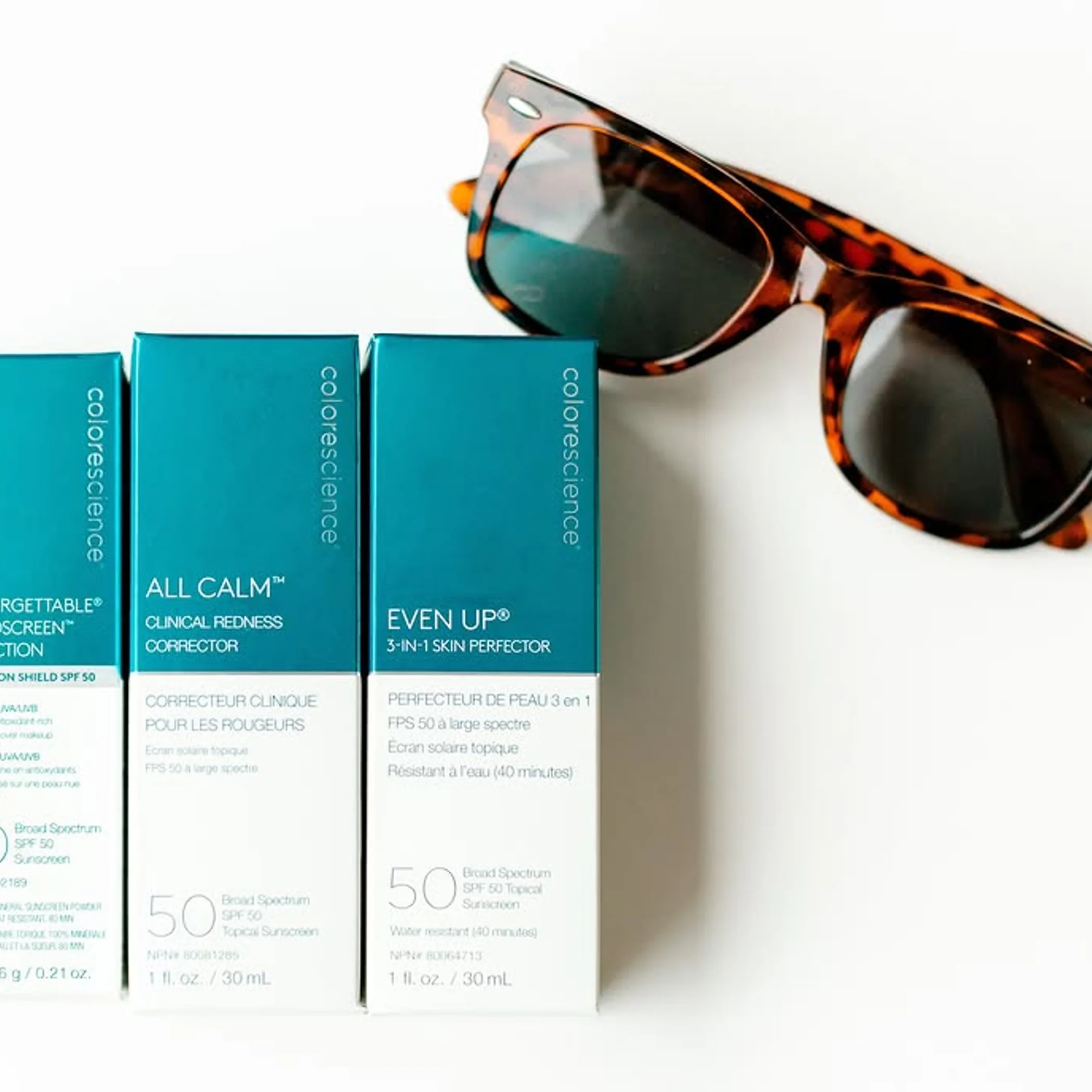
One sees in the treatment room that people will go to great lengths for complicated solutions to something a bit of daily sunscreen would have nipped in the bud. It is not as though it solves everything, skin is too complex for that, but as support? You could not ask for a simpler answer to why spf is part of the morning order of things.
Make it a broad spectrum SPF and do not skimp on it. Face and neck every morning and reapply as the day demands. Not very glamorous, I grant you, but neither is having to put right damage you could have done without.
FAQ
Is daily SPF a must?
If you are in daylight, yes. Even for a short outing, to commute or while at the window. Cumulative UV does its damage over time and is a factor in photoaging.
Will SPF 30 suffice?
When put on with the proper liberal hand, it will. Down under however you will see many opt for an SPF 50 or 50+ to be on the safe side. In practice the difference between 30 and 50 comes down to application more than anything.
Can I just put on some makeup with SPF?
As an additional measure sure, but rarely as sole protection. The trouble is most do not put on enough of a tinted product to get the sun protection factor it claims.
The 4am rule?
That is for productivity, not skincare. Waking at the crack of dawn to put in some work or exercise is one thing; sunscreen is another, although if you are out once the sun is up you will want your SPF.
What of the 20/20/20 or 30/30/30 routines?
You will hear about these frameworks online for your blocks of protein, planning or mindfulness, but they are not medical standards. A morning routine is not obligatory, yet if you have one, let sunscreen be the easy and useful part of it.
